
Diagnosis
The script hides information from you on purpose. You find out what is wrong by examining the patient, exactly like a real medic.
🧰 The tools
Each tool reveals specific vitals. None of them are consumed.
| Tool | Item | Reveals | Takes |
|---|---|---|---|
| Pulse Check | - | Pulse by hand: normal, rapid, slow, weak, thready or absent | 3s |
| Airway & Breathing | - | Airway, breathing rate | 4s |
| Pulse Oximeter | pulse_oximeter | Heart rate, oxygen saturation | 3s |
| Blood Pressure Cuff | bp_cuff | Blood pressure (systolic / diastolic) | 5s |
| Thermometer | thermometer | Body temperature | 3s |
| Stethoscope | stethoscope | Lung sounds, heart sounds | 5s |
| Ultrasound (FAST) | ultrasound | Blood in the belly, around the heart or in the chest, a collapsed lung | 6s |
| Penlight | penlight | Pupil reaction | 3s |
| Glucometer | glucometer | Blood sugar | 4s |
The pulse check, airway check, stethoscope and ultrasound are played by hand, you count the beats, watch the chest, listen to both sides. See Hands-on Checks. The times above are for when minigames are off.
A reading stays on the chart for 2 minutes, then goes stale. On a patient whose condition is changing, measure again.
📊 What normal looks like
| Vital | Normal | Critical |
|---|---|---|
| Heart rate | 76 bpm | below 40 or above 150 |
| Blood pressure | 120 / 80 | systolic below 80 |
| Oxygen saturation | 98% | below 88% |
| Breathing rate | 16 / min | - |
| Temperature | 36.8 °C | above 40 °C |
| Blood sugar | 95 | - |
| Blood volume | 5,000 ml | below 2,600 = collapse |
When a monitored patient crosses a critical threshold, a code blue fires automatically, every on-duty medic's pager goes off and the hospital board alarms.
Temperature can be shown in °F instead (Config.UI.temperatureUnit).
👂 What the sounds mean
The stethoscope gives you more than a number.
| Lung sound | Means |
|---|---|
| Wheezing | Airway obstruction, asthma, anaphylaxis |
| Crackles | Fluid in the lungs, pneumonia |
| Quiet / absent on one side | Collapsed lung, tension pneumothorax if absent |
| Gurgling | Water in the airway |
| Stridor | The airway is swelling or injured |
| Heart sound | Means |
|---|---|
| Muffled | Blood around the heart, cardiac tamponade |
These are the life threats. See Trauma & Life Threats.
| Pupils | Means |
|---|---|
| Pinpoint | Opioids on board, likely an overdose |
🤲 Palpating
Select a body part and use Palpate. It takes 3 seconds and hurts the patient a little.
It tells you whether the part feels broken. That is enough to splint it, but not enough to cast it. Palpating the abdomen checks for a broken pelvis.
A palpated fracture is suspected. A confirmed fracture needs an X-Ray or CT. Casts require confirmation.
🦠 Diagnosing illness
Two steps.
Step 1, Field diagnosis
Use the right tools on the patient. Each disease has a list of tools that will make it show up as suspected.
| Illness | Tools that suspect it |
|---|---|
| Common Cold, Influenza | Thermometer + Stethoscope |
| Pneumonia | Thermometer + Stethoscope + Pulse Oximeter |
| Food Poisoning | Thermometer |
| Dehydration | BP Cuff + Pulse Oximeter |
| Sepsis | Thermometer + BP Cuff + Pulse Oximeter |
| Anaphylaxis | Stethoscope + Pulse Oximeter |
| Hypoglycemia / Hyperglycemia / Diabetes | Glucometer |
| Asthma | Stethoscope + Pulse Oximeter |
| Epilepsy, Migraine | Penlight |
| High Blood Pressure | BP Cuff |
| Panic Attack | Pulse Oximeter + Stethoscope |
| Insomnia | Penlight + BP Cuff |
| Hypothermia | Thermometer |
| Opioid Overdose | Penlight + Pulse Oximeter |
| Transfusion Reaction | Thermometer + BP Cuff |
Step 2, Confirmation
| Disease | Confirmed by |
|---|---|
| Common Cold, Influenza, Pneumonia, Food Poisoning, Dehydration, Sepsis, Diabetes | Blood test at a hospital laboratory |
| Everything else | Field diagnosis is enough |
Acute emergencies, anaphylaxis, low blood sugar, panic attacks, overdoses, never need a lab test. In real life you do not wait for results on those, and neither do you here.
🔍 What you cannot find in the field
| Condition | Only found by |
|---|---|
| Internal bleeding | CT or MRI, or the bedside ultrasound, for the chest and belly |
| Collapsed lung, blood around the heart | Ultrasound or CT (the stethoscope only suspects them) |
| Confirmed fracture | X-Ray, CT or MRI |
| Concussion | CT or MRI |
| Deep infection | MRI or blood culture |
| Blood type | Blood test |
| Toxicology / drugs on board | Blood test |
| Bacterial infection, sepsis | Blood culture |
| Blood alcohol | Blood test, or a quick breath test with a breathalyzer |
See Hospital Tests.
📡 The patient monitor
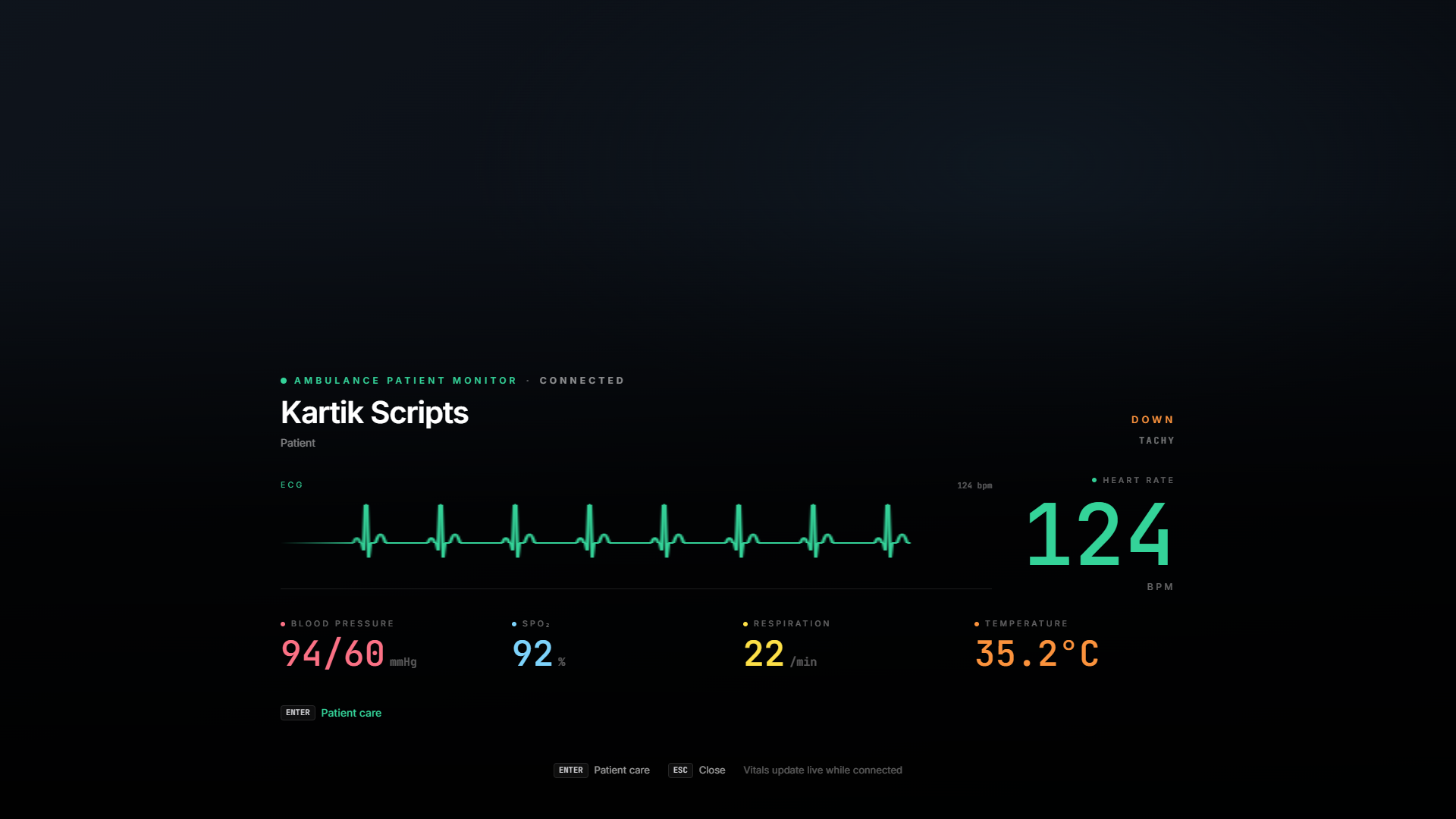
Deploy a patient_monitor and connect a patient to it. Instead of taking one-off readings, you get live continuous vitals drawn on the prop's own screen, with a real ECG trace.
- The patient must stay within 4 m or the leads disconnect.
- It reads the numbers, heart rate, blood pressure, oxygen, breathing, temperature. Lung and heart sounds, the airway, pupils and blood sugar still need you.
- When their vitals go critical, the monitor alarms and a code blue fires.
- Ambulances have a monitor in the back.
See Equipment.